Last Saturday I packed my cameras, a Nikon D850 and a Z7II, and drove to the Bannau Brycheiniog National Park. My assignment: photograph Alpaca My Boots farm for Voice magazine. What I did not pack was any expectation of what was about to happen.
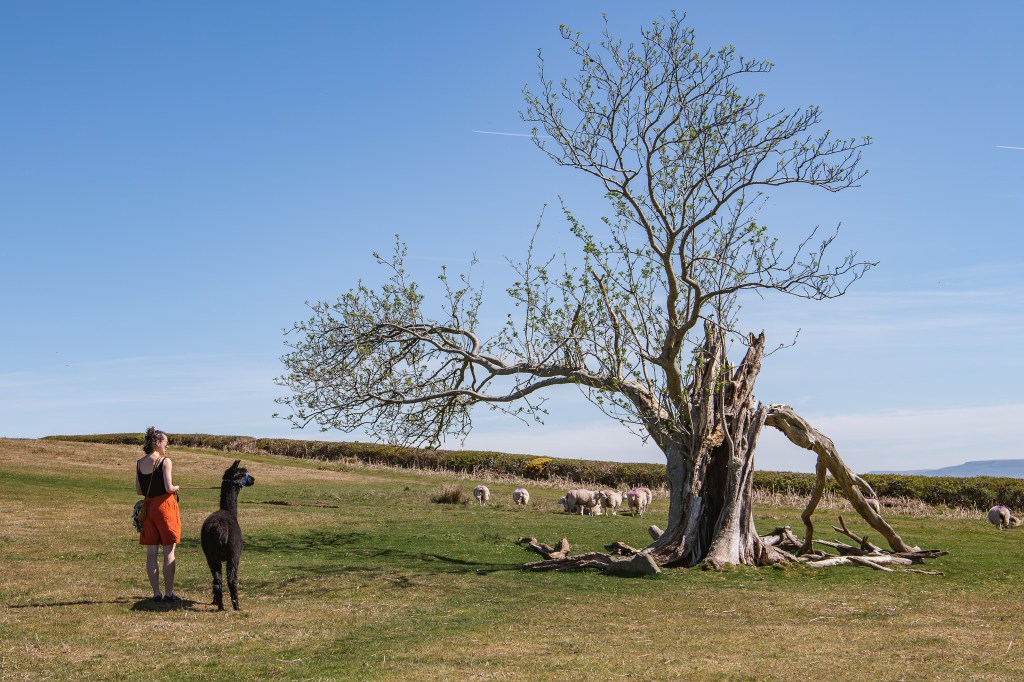
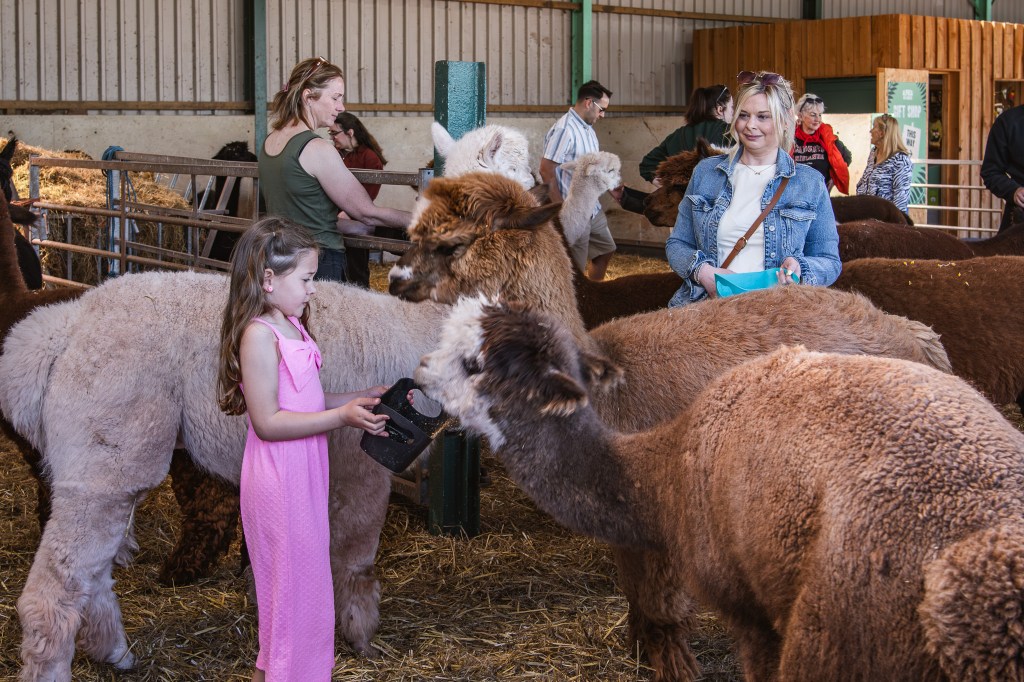
The alpaca experience at Alpaca My Boots is 90 minutes of something genuinely different. It begins with a meet and greet, where you learn some wonderful and slightly ridiculous fun facts about these creatures. Then comes the trek, approximately 50 minutes at a gentle pace that works for most ages and abilities, up through the hill with views that make you stop mid-sentence. At the end you feed the alpacas before heading to the gift shop, where it is apparently very difficult to leave without an alpaca-shaped souvenir. I speak from experience.
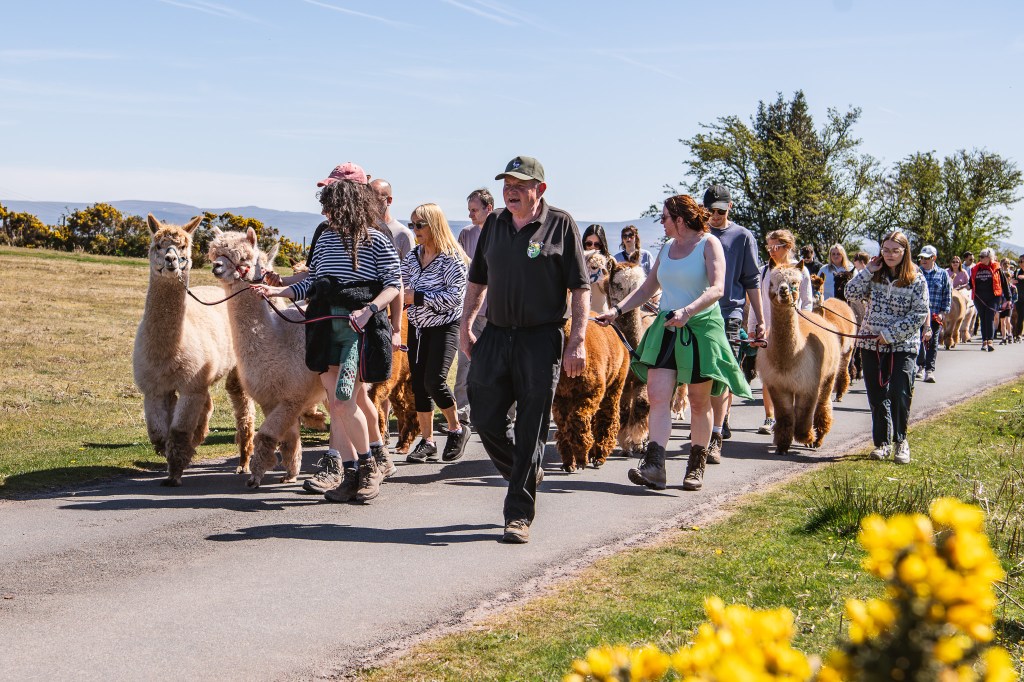
What surprised me most was not the landscape, as breathtaking as it was. It was the alpacas themselves. Each one a distinct character. Reg, for example, used to be a herd leader. Now he is not, and he seems entirely at peace with that. There is something quietly profound about watching an animal find its place and simply get on with it. The farm guide put it beautifully: “a lot of our suffering comes from not having boundaries.” These animals live that truth without effort. They pause when they want to pause. They stop and take in the view. They occasionally lose their temper and spit, but honestly, who among us hasn’t. They have a gentle strength that comes through in their posture, their pace, their complete lack of pretence. Stoic, adaptable, patient and surprisingly moving company for a Saturday morning.
The Photography, Honestly, One of the Most Challenging Shoots I Have Done
I shoot corporate events for a living. Conferences, awards ceremonies, gala dinners, environments where I control my position, anticipate the schedule, and know more or less what is coming next. An alpaca trek through the Brecon Beacons is none of those things. And I mean that as the highest possible compliment.
I had two cameras with me, my Nikon D850, a workhorse of a camera that I trust completely in unpredictable conditions, and my Nikon Z7II, a mirrorless body that gives me extraordinary detail and the kind of autofocus performance that matters when your subject is a sentient, opinionated animal with absolutely no interest in your shot list. Between them I was running a 24–70mm f/2.8 for the wider environmental shots, the group walking the hillside, the landscape, the candid human moments and a 70–200mm f/2.8 for the portraits, the close-up character studies, and the moments when an alpaca decided to do something extraordinary from forty metres away.
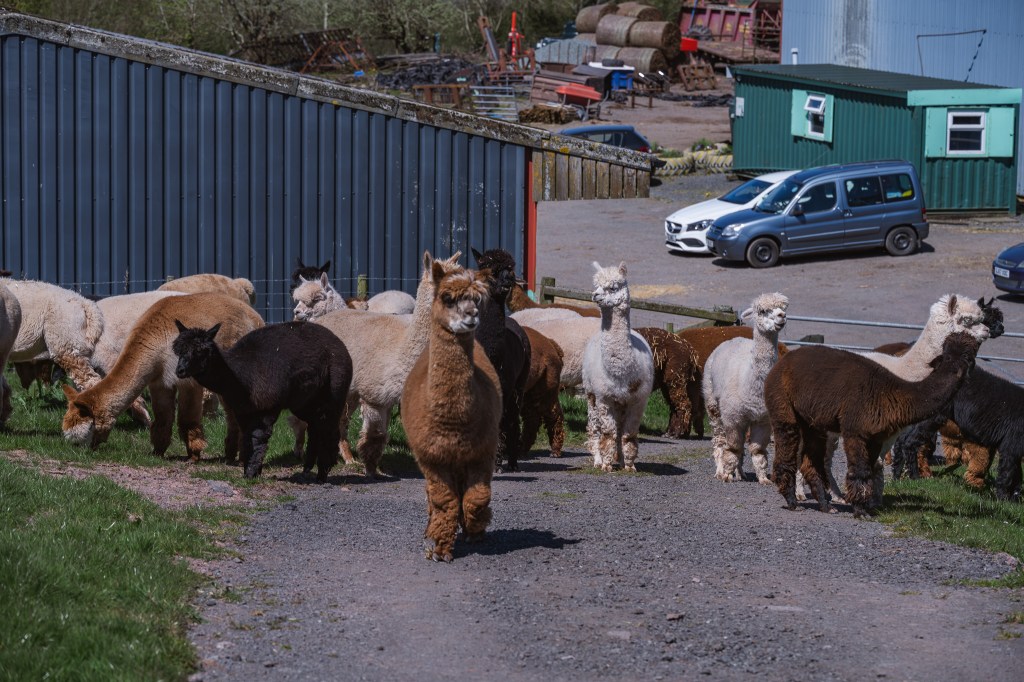
Switching between the two constantly while also moving through a group of people and animals on a hillside is, to put it plainly, a workout. Not just physically, though it is that too, but mentally. Every time I changed position I had to reassess the light, recheck my settings, decide which lens served the moment, and get the shot before it disappeared. There is no second chance with a candid moment. There is no “could you do that again please.” There is just the moment, and whether you were ready for it.
The light was the real battle. The Bannau Brycheiniog sky that morning was spectacular, deep blue, high contrast, the kind of light that looks extraordinary in the landscape and absolutely brutal for a photographer trying to expose correctly for both a bright white alpaca and a dark-coated one standing next to each other in the same frame. The dynamic range was punishing. In open sunlight the shadows went deep and the highlights threatened to blow out completely. In the shaded sections of the trek the opposite problem soft, flat, beautiful for portraits but losing all the drama of the landscape behind.
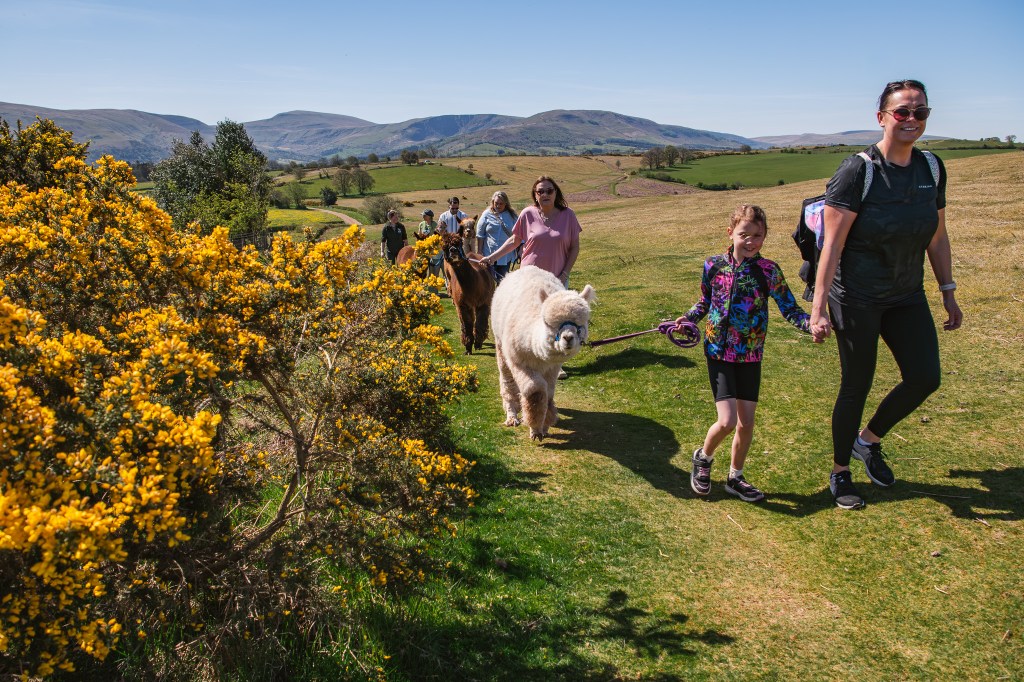
My approach was to stay in manual exposure throughout, using the Nikon D850’s metering as a guide but trusting my eye to make the final call. I was shooting RAW on both bodies, non-negotiable for this kind of shoot where the editing room is where you recover the detail the camera could not hold in a single exposure. I kept my ISO as low as the conditions allowed, pushing up only when the shade demanded it, and relied on the aperture to keep my shutter speed high enough to freeze motion because alpacas, despite their apparently serene demeanour, move with surprising speed and unpredictability when they decide they want to be somewhere else.
The group itself added another layer of complexity. When you are photographing a corporate event, people tend to stay relatively still, they are listening to a speaker, sitting at a table, networking in a predictable social pattern. A group of people walking with alpacas on a hillside moves like a living organism. It contracts and expands, clusters and spreads, stops and surges forward. Finding the angles that showed both the people and the animals authentically, without turning it into a chaotic snapshot, required constant movement, constant anticipation, and a willingness to abandon the shot I thought I wanted in favour of the one that was actually happening.
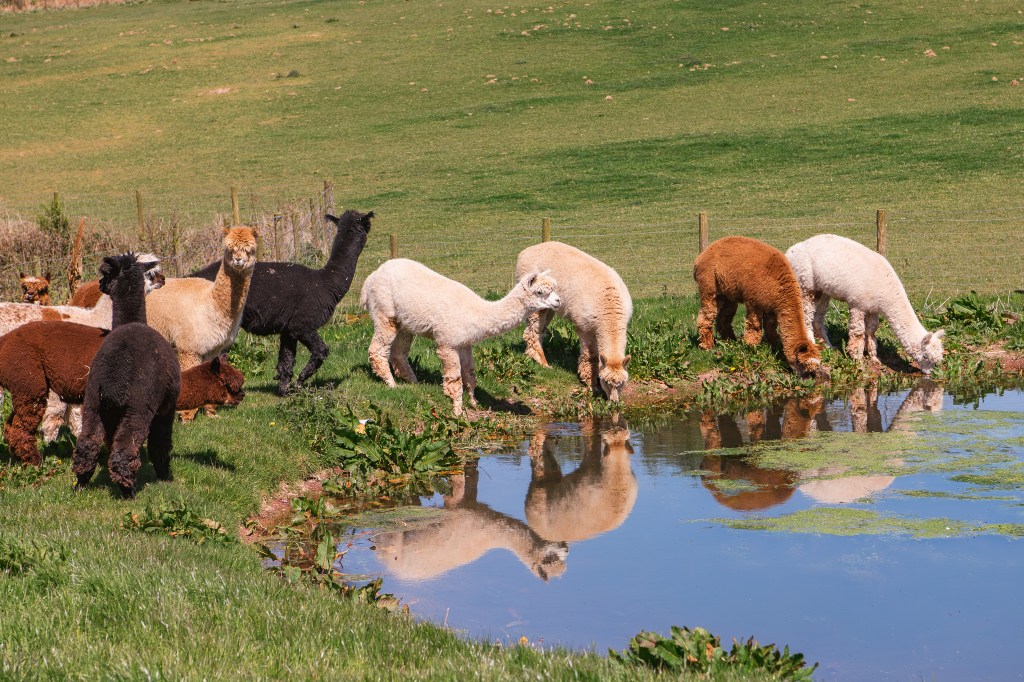
The autofocus on the Z7II was invaluable for the portrait work. Eye-detection autofocus on an alpaca is, I can confirm, a genuine thing that works, and it is slightly magical to watch. The camera found their eyes faster than I could, locked on, and held, which freed me to concentrate on the expression, the moment, the composition, rather than the technical act of focusing. That is what good equipment should do. Not replace your eye, but free it.
By the end of the trek my legs knew about the hill and my brain knew about the light. It was the kind of shoot that reminds you why you chose this job: unpredictable, demanding, alive. Every technically difficult shoot makes you a better photographer for the next one. I came away with images I am genuinely proud of, and a much deeper respect for wildlife and editorial photographers who do this every single day.
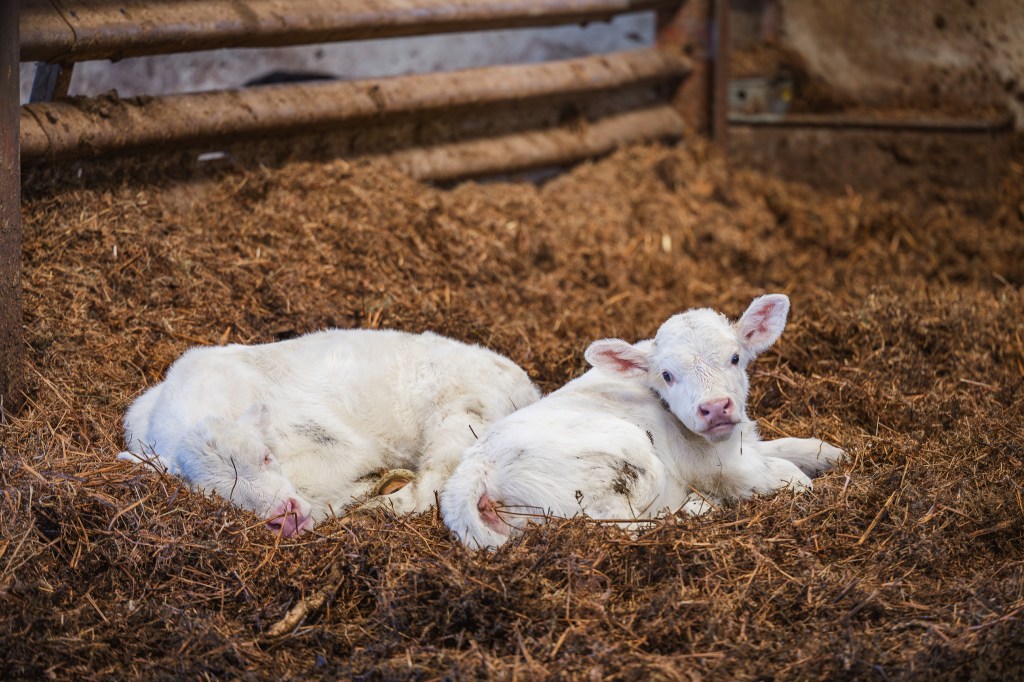
And then the cows. Nobody mentioned the cows. Leah and I wandered into the barn at the end and there they were, mothers and newborn calves, quiet and warm in the hay. Cows are my favourite animal. So strong, so gentle, so careful with their trust. I may have stood there longer than was strictly professional. The Z7II came back out. I could not help it.
Alpaca My Boots is open for treks throughout the week, seven sessions, with two each day on weekends, plus Mindful Wednesday sessions designed to slow the body and settle the mind. Pre-booking is essential and all treks start at 11am. The farm is also perfectly suited for team building and company away days, a genuinely memorable experience that gets people out of the office and into something real together. If you are an event organiser or a company looking for something different, I would happily photograph it.
📍 Bannau Brycheiniog National Park, South Wales 📸 Shot for Voice magazine 🦙 alpacamyboots.co.uk











 MKS Photography